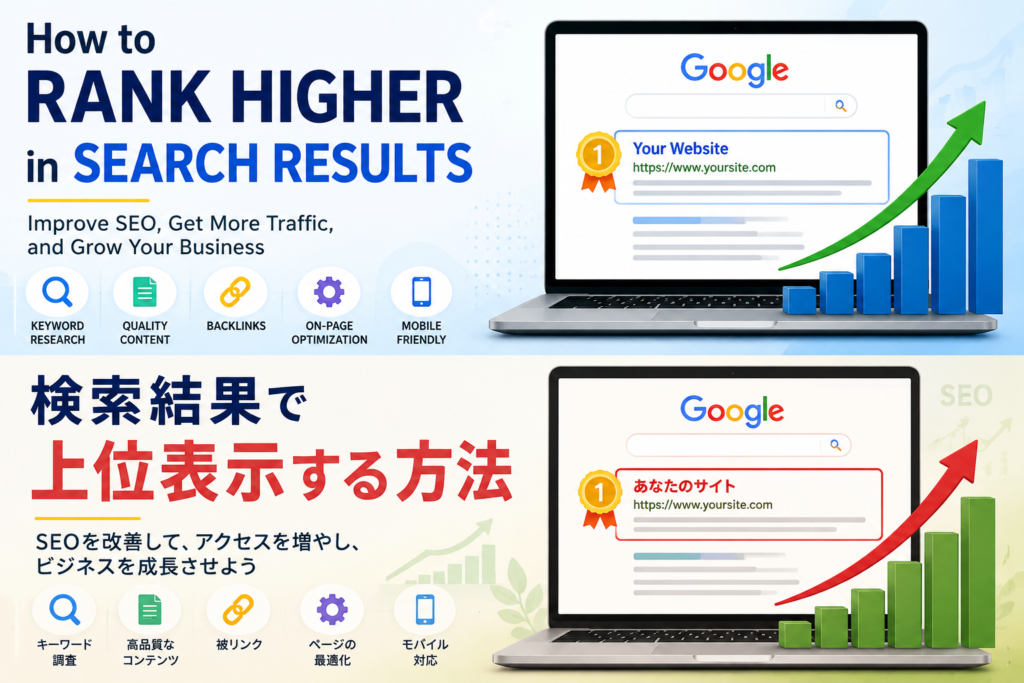
Introduction
Have you ever published a blog post and wondered, “Why isn’t my article appearing higher in Google search results?”
Creating good content is important, but simply publishing an article is not enough. To rank higher, you need to understand what people are searching for, what they really want to know, and how Google evaluates content.
SEO is not about using tricks to manipulate search rankings. It is about creating the right content for the right people at the right time.
Today, AI can help us research keywords, understand search intent, organize information, and create better content more efficiently. However, human experience, originality, trust, and usefulness are still essential.
In this article, “How to Rank Higher in Search Results,” you will learn the fundamental steps for improving your search visibility—from keyword selection and search intent to content quality, internal links, website authority, user experience, and AI.
If you want more people to discover your blog through Google, start by understanding one simple principle:
Don’t write only for search engines. Create the best possible answer for the people who are searching.
Japanese
前書き・導入文
ブログ記事を公開したあと、「なぜ自分の記事はGoogleの検索結果でもっと上位に表示されないのだろう?」と思ったことはありませんか?
良いコンテンツを作ることは重要です。しかし、ただ記事を公開するだけでは十分ではありません。検索上位を目指すためには、人々が何を検索しているのか、本当は何を知りたいのか、そしてGoogleがコンテンツをどのように評価しているのかを理解する必要があります。
SEOとは、検索順位を操作するための裏技ではありません。大切なのは、「正しい人に、正しいタイミングで、正しい情報を届けること」です。
現在では、AIを活用することで、キーワード調査、検索意図の分析、情報整理、記事構成などを効率化し、より質の高いコンテンツを作りやすくなりました。しかし、AI時代になっても、人間自身の経験、独自性、信頼性、そして読者にとって本当に役立つ情報の価値は変わりません。
この記事「How to Rank Higher in Search Results(検索結果で上位表示する方法)」では、キーワード選定や検索意図から、コンテンツの品質、内部リンク、Webサイトの権威性、ユーザー体験、AI活用まで、検索上位を目指すために必要な基本を分かりやすく解説します。
Google検索からより多くの人にブログを見つけてもらいたいなら、まず一つの大切な考え方から始めてください。
「検索エンジンのためだけに記事を書くのではなく、検索している人にとって最高の答えを作る。」
これこそが、検索上位を目指すSEOの基本です。
How to Rank Higher in Search Results
How to Rank Higher in Search Results
Getting your website to appear higher in search results is one of the most important goals of SEO. However, ranking high on Google is not simply about adding a keyword many times or publishing a large amount of content. You need to understand what people are searching for, why they are searching, and what kind of information will actually help them.
Today, search engines are becoming increasingly sophisticated. Google uses complex systems to understand a search query, evaluate pages, and decide which results may provide the best experience for the user. AI is also changing the way information is discovered and presented.
For this reason, modern SEO should focus on people first. If you create useful content, build trust, improve your website, and satisfy search intent, you can create a stronger foundation for higher ranking.
1. Understand Search Intent Before Writing
The first thing you need to understand is search intent.
Search intent means the purpose behind a query. When people enter words into Google, they usually have a reason. They may want information, compare products, solve a problem, find a local business, or buy something.
For example, a person searching for “how to start a blog” probably wants a beginner-friendly guide. A user searching for “best blogging platform” may want a comparison. Someone searching for “SEO company near me” may have strong local intent.
These searches look different because the people behind them need different answers.
Before writing a page, ask yourself:
“What does this person really want to know?”
Then look at the current search results. Study what kind of pages appear near the top. This can help you understand what Google currently considers relevant to that particular keyword.
Do not simply copy what already exists. Use the results as information, then create something better based on your own knowledge, research, and experience.
2. Choose the Right Keyword
Keyword selection is still an important part of SEO.
However, you don’t need to put the same keyword everywhere. Modern search systems can understand related concepts, context, and meaning much better than older systems could.
The important point is choosing the right keyword for the right audience.
A broad keyword may have high search volume, but it may also have strong competition. A more specific query may receive less traffic but attract people who are much closer to what your website offers.
This is particularly important for a business.
Instead of chasing every popular keyword, think about the subjects that are directly connected to your products, services, knowledge, or brand.
Good keyword optimization begins with relevance, not volume.
3. Create High-Quality Content
Google wants to provide useful results to its users. Therefore, content quality matters.
High-quality content should answer the main question clearly and provide enough supporting information for the reader to understand the subject.
It should not exist only to attract search traffic.
If a visitor reaches your page and immediately feels that it does not answer the question, the content is unlikely to create a good experience.
Think about what would genuinely help the reader.
You can include explanations, examples, comparisons, images, original observations, practical steps, and personal experience where appropriate.
For example, if you are explaining how to improve blog traffic, don’t only say, “Write good articles.”
Explain what “good” actually means.
Show readers how to select a topic, understand a query, create a useful structure, optimize a page, and measure the results.
Specific content is usually more useful than vague advice.
4. Make Your Page Easy to Understand
A good page should be easy for both people and search engines to understand.
Use a clear title and logical headings. Keep paragraphs readable. Explain difficult ideas in simple language.
Your main topic should be obvious.
If the page tries to discuss ten unrelated subjects at the same time, both the reader and the search engine may find it difficult to identify the primary purpose.
Good structure also helps mobile visitors.
Many people now search from a mobile device, so large blocks of text can make a website difficult to read. Shorter paragraphs, meaningful headings, useful images, and a clean layout can create a better reading experience.
Remember that optimization is not just about search engines.
It is also about making your site easier for real people to use.
5. Build Website Authority and Trust
Authority cannot normally be created overnight.
You build it gradually.
Publishing reliable content around a consistent subject can help establish what your website is about. Your articles should support one another instead of existing as completely isolated pages.
For example, a website about SEO might have separate articles covering keyword research, content creation, search intent, internal links, technical SEO, AI, ranking analysis, and website optimization.
Together, these pages can build a deeper resource for readers.
Your identity can also matter.
Where appropriate, provide an author Profile that explains who created the content and why readers may trust that person’s knowledge or experience.
A professional profile on your own site can help readers understand the person behind the information. For a business audience, a genuine LinkedIn presence may also support your broader online identity and brand.
The objective is not to create artificial signals.
It is to demonstrate real expertise and transparency.
6. Use Internal Links Properly
A link connects one page to another.
Internal links are especially useful because they help readers discover related information within your website.
Suppose you have an article about keyword research and another page about search intent. When the two subjects are naturally connected, you can link them.
This provides two benefits.
First, it helps the user continue learning.
Second, it helps search engines understand the relationship between your pages.
However, don’t add links simply because you believe more links automatically mean better SEO.
Every link should have a purpose.
Good internal linking is part of building a logical website structure.
7. Earn Valuable External Links
Links from other websites can also contribute to authority, particularly when those websites are relevant and trustworthy.
However, quality is more important than simply collecting large numbers of links.
A natural way to earn links is to create something worth referencing.
This might be original research, useful data, a detailed tutorial, an insightful example, a unique tool, or an article based on genuine experience.
When people find your content valuable, they may choose to mention or link to it.
That is very different from trying to manufacture authority through low-quality link building.
Build value first.
Links can follow.
8. Improve Existing Pages
SEO does not end when you publish an article.
Sometimes the fastest opportunity is not building a new page but improving an existing one.
Look at pages that already receive impressions or traffic.
Ask whether the information is still accurate.
Could the introduction be clearer?
Does the article answer the query quickly enough?
Is there missing information?
Could you add a better example?
Are there relevant internal links that should be included?
Does the page work properly on mobile?
Small improvements can make content more useful.
You can also review pages that target similar keywords. If several weak pages compete with one another, it may be better to consolidate or reorganize them into a stronger resource.
The goal is not to have the most pages.
The goal is to have useful pages.
9. Think About the User Experience
Search optimization and user experience should work together.
A fast, clear, accessible website makes it easier for people to consume your content.
If a site is confusing, extremely slow, or covered with distracting elements, even excellent information may be difficult to use.
Look at your website as a visitor would.
Can you understand what the page is about immediately?
Can you find the important answer?
Can you navigate to related content?
Does the site work well on a smartphone?
Does the design support the content rather than interfere with it?
It’s easy to become accustomed to your own website and overlook problems that new visitors notice immediately.
Review it regularly from the user’s point of view.
10. SEO and AI Should Work Together
AI has changed content creation and search.
It can help with research, topic organization, keyword ideas, outlines, editing, comparisons, and identifying questions that readers may have.
But AI itself is not a guarantee of higher ranking.
Publishing hundreds of generic AI-generated articles without adding real value is not a strong long-term strategy.
Instead, use AI as a tool.
Combine its speed with human judgment, experience, original information, fact-checking, and editorial decisions.
For example, AI can help you organize a complicated topic into a logical structure. You can then add your own examples, knowledge, opinions, data, and experience.
This combination can make the creation process more efficient while keeping the final content valuable to people.
11. Local SEO Requires Relevance
If you operate a local business, your SEO strategy may be different from that of a website targeting a global audience.
Local searches often contain geographic intent.
People may search for a service in a city, neighborhood, or nearby area.
Make sure your business information is accurate and consistent. Clearly explain what you provide and where you provide it.
Create useful content for your actual customers rather than producing dozens of nearly identical location pages.
A local page should have genuine value.
When location information, services, reputation, and useful content work together, search engines have more context for understanding the business.
12. Build a Recognizable Brand
SEO can bring people to your website, but a strong brand can give them a reason to remember it.
Think beyond a single ranking.
If people recognize your name, trust your information, and return to your site directly, your website becomes more than another result on a search page.
Consistency is important.
Your message, expertise, visual identity, author information, and content should support a recognizable position.
Building a brand takes time, but it can create long-term value that cannot be measured only by the ranking of one keyword.
13. Don’t Chase the Algorithm
Google changes continuously.
Search systems evolve, new technologies appear, AI develops, and user behavior changes.
Trying to react to every small change can make SEO unnecessarily complicated.
Instead, focus on principles that remain valuable:
Understand your audience.
Choose relevant topics.
Match search intent.
Create original and useful content.
Make your website easy to use.
Build authority through genuine expertise.
Improve your pages over time.
Measure what works.
These principles create a stronger foundation than trying to discover a temporary trick in the ranking system.
14. Higher Rankings Come From Continuous Improvement
There is no single button that makes a website rank high.
SEO is a process.
You research.
You create.
You publish.
You measure.
You learn.
You improve.
Then you repeat the process.
Some pages may perform quickly, while others may need time. Some keywords will be extremely competitive. Other opportunities may be easier to reach.
The important thing is to learn from the results.
When something works, try to understand why.
When something doesn’t work, look for what can be improved.
Over time, this experience can make your SEO decisions better.
Conclusion: How to Rank Higher in Search Results
If you want to rank higher in search results, begin with the person behind the search.
Understand the query and its intent. Choose the right keyword. Create high-quality content that provides useful information. Make every page easy to understand and use. Build meaningful internal links, earn trustworthy external links, strengthen your authority, and continue improving your website.
SEO is not simply about convincing Google that your page deserves a high ranking.
It is about building a site that deserves to be useful to people.
Use AI intelligently, but add human knowledge and experience. Strengthen your Profile and brand where appropriate. Think about mobile users, local audiences, website quality, and the overall experience you provide.
You don’t need to master every SEO technique immediately.
Start with one keyword.
Create one genuinely useful page.
See how people and search systems respond.
Then make it better.
Repeat that process, and you will gradually build stronger content, greater authority, more search traffic, and a website with a better chance of achieving higher rankings.
The best way to rank higher is not to search for shortcuts. It is to become a better answer to what people are searching for.
Japanese
「検索結果で上位表示する方法」
Googleの検索結果で自分のWebサイトを上位表示させることは、SEOにおける重要な目標の一つです。しかし、Googleで検索上位を獲得するためには、単にキーワードを何度も入れたり、大量の記事を公開したりすればよいわけではありません。
大切なのは、人々が何を検索しているのか、なぜ検索しているのか、そして、どのような情報が本当に役立つのかを理解することです。
現在の検索エンジンは、以前よりも高度になっています。Googleは複雑なシステムを使って検索クエリの意味を理解し、それぞれのページを評価し、ユーザーにとって最も役立つ可能性のある検索結果を判断しています。また、AIの普及によって、情報が発見され、提供される方法も変化しています。
だからこそ、これからのSEOでは、まず「人」を中心に考えることが重要です。
役立つコンテンツを作り、信頼を積み上げ、Webサイトを改善し、検索意図を満たしていけば、検索上位を目指すための強い土台を作ることができます。
1.記事を書く前に検索意図を理解する
最初に理解する必要があるのが、検索意図(Search Intent)です。
検索意図とは、ユーザーが検索する目的のことです。
人がGoogleに言葉を入力するとき、そこには何らかの目的があります。
情報を知りたいのかもしれません。
商品を比較したいのかもしれません。
問題を解決したい場合もあります。
近くのお店や会社を探している場合もあれば、商品を購入したい場合もあります。
たとえば、
「ブログの始め方」
と検索する人は、初心者向けの具体的な方法を知りたい可能性があります。
一方、
「初心者におすすめのブログサービス」
と検索する人は、複数のサービスを比較したいと考えているでしょう。
さらに、
「近くのSEO会社」
と検索する人には、地域性の強い検索意図があります。
同じ検索でも、検索する人によって求めている答えは異なります。
記事を書く前に、
「このキーワードで検索する人は、本当は何を知りたいのだろう?」
と考えてください。
そして、実際の検索結果も確認します。
現在、どのようなページが上位表示されているのかを見ることで、そのキーワードについてGoogleがどのような情報を関連性の高いものとして判断しているのかを理解する手掛かりになります。
ただし、上位記事をそのまま真似してはいけません。
既存の記事を参考情報として確認したうえで、自分自身の知識、調査、経験を加えて、さらに役立つ記事を作ることが重要です。
2.正しいキーワードを選ぶ
SEOでは、キーワード選定も重要です。
ただし、同じキーワードを文章のあらゆる場所に何度も入れる必要はありません。
現在の検索システムは、以前よりも関連する言葉や文章の文脈、意味などを理解できるようになっています。
大切なのは、正しい読者に対して、正しいキーワードを選ぶことです。
検索ボリュームが大きなキーワードは、多くのアクセスを期待できる反面、競争も激しくなる場合があります。
一方、より具体的な検索キーワードは検索数が少なくても、自分のWebサイトが提供する情報や商品、サービスを本当に必要としている人を集められる可能性があります。
これはビジネス目的のブログでは特に重要です。
単に検索数の多いキーワードばかりを狙うのではなく、自分の商品、サービス、専門知識、ブランドと直接関係するテーマを考えてください。
良いSEOのキーワード選定は、検索ボリュームだけではなく、関連性から始まります。
3.高品質なコンテンツを作る
Googleは、ユーザーに役立つ検索結果を提供しようとしています。
そのため、コンテンツの品質は重要です。
高品質なコンテンツでは、読者の主要な疑問に明確に答え、テーマを十分に理解できるだけの関連情報を提供する必要があります。
検索アクセスを集めることだけを目的に記事を作るべきではありません。
ユーザーがあなたのページを訪問して、
「知りたい答えがない」
と感じれば、良いユーザー体験にはなりません。
読者にとって、本当に何が役立つのか?
という視点で考えてください。
説明、具体例、比較、画像、独自の考察、実践手順、自分自身の経験などを必要に応じて盛り込みます。
たとえば、「ブログのアクセスを増やす方法」を説明するのであれば、
「良い記事を書きましょう」
だけでは十分ではありません。
テーマの選び方、検索クエリの理解、記事構成、ページの最適化、公開後の結果の確認方法まで具体的に説明した方が読者に役立ちます。
曖昧なアドバイスより、具体的な情報の方が価値を生みやすいのです。
4.ページを分かりやすくする
良いページは、人間にも検索エンジンにも理解しやすい必要があります。
タイトルを明確にし、見出しを論理的に配置します。
文章を読みやすくし、難しい内容は簡単な言葉で説明します。
また、そのページの主要テーマが一目で分かることも大切です。
一つのページで関係のないテーマをいくつも扱ってしまうと、読者だけでなく検索エンジンも、そのページが何について書かれているのか判断しにくくなります。
ページ構成は、スマートフォンから訪問するユーザーにとっても重要です。
現在、多くの人がモバイル端末から検索しています。
長すぎる文章の塊は、スマートフォンでは読みにくくなります。
適切な段落、分かりやすい見出し、役立つ画像、整理されたレイアウトなどを使い、読みやすいページを作りましょう。
SEOの最適化は検索エンジンだけを対象とするものではありません。
実際にページを読む人が使いやすいサイトを作ることもSEOの重要な部分です。
5.Webサイトの権威性と信頼を築く
Webサイトの権威性は、通常、一晩で作れるものではありません。
少しずつ積み上げていくものです。
一つのテーマについて信頼できる記事を継続的に公開することで、「このWebサイトは何について詳しいサイトなのか」が明確になっていきます。
それぞれの記事を完全に独立させるのではなく、関連する記事同士をつなげていくことも重要です。
たとえばSEOを扱うWebサイトであれば、
キーワード調査、コンテンツ作成、検索意図、内部リンク、テクニカルSEO、AI、検索順位分析、Webサイト最適化などについて、それぞれ詳しい記事を作れます。
それらの記事が集まることで、読者にとってより深く学べるWebサイトになります。
また、必要に応じて著者プロフィールを掲載し、
「誰がこの記事を書いたのか」
「なぜ、この人の情報を参考にできるのか」
を伝えることも大切です。
ビジネス分野であれば、LinkedInなどのプロフィールがオンライン上での人物像やブランドを補足する場合もあります。
重要なのは、SEOのためだけに人工的な評価シグナルを作ることではありません。
本物の専門性と透明性を示すことです。
6.内部リンクを正しく使う
リンクは、一つのページと別のページをつなぎます。
特に内部リンクは、読者がWebサイト内の関連情報を見つけるために役立ちます。
たとえば「キーワード調査」についての記事と「検索意図」についての記事がある場合、内容に関連性があれば内部リンクでつなげられます。
これには二つのメリットがあります。
一つ目は、読者がさらに学びやすくなることです。
二つ目は、検索エンジンが各ページの関連性を理解しやすくなることです。
ただし、
「リンクを増やせばSEOに強くなる」
と考えて、意味のないリンクを大量に設置するのはおすすめできません。
リンクには、それぞれ目的が必要です。
適切な内部リンクは、論理的なWebサイト構造を作るためにも重要です。
7.価値のある外部リンクを獲得する
他のWebサイトから自分のサイトに向けられるリンクは、特に関連性と信頼性のあるサイトからのものであれば、Webサイトの権威性を高める要素の一つになり得ます。
しかし、単純にリンク数を増やせばよいわけではありません。
量より質が重要です。
自然にリンクを獲得する方法の一つは、「他の人が紹介したくなるコンテンツ」を作ることです。
独自調査、役立つデータ、詳しい解説、分かりやすい具体例、便利なツール、自分自身の経験に基づく記事などが考えられます。
人が「これは役立つ」と感じれば、その記事を紹介したりリンクしたりする可能性があります。
価値を先に作ります。
リンクは、その結果として生まれるものだと考えましょう。
8.既存ページを改善する
SEOは、記事を公開したら終わりではありません。
新しい記事を作るよりも、すでに存在するページを改善した方が効果的な場合もあります。
すでに表示回数やアクセスが発生しているページを確認してみましょう。
情報は現在でも正確でしょうか?
導入部分はもっと分かりやすくできないでしょうか?
検索者の疑問に早く答えられているでしょうか?
不足している情報はないでしょうか?
もっと良い具体例を追加できないでしょうか?
内部リンクは適切でしょうか?
スマートフォンでも読みやすいでしょうか?
小さな改善でも、コンテンツの価値を高められます。
また、似たキーワードを狙った弱いページが複数存在する場合は、一つの強い記事にまとめたり、ページ構成を整理したりすることも検討できます。
ページ数を増やすこと自体が目的ではありません。
役立つページを増やすことが目的です。
9.ユーザー体験を考える
SEOとユーザー体験は、一緒に考える必要があります。
高速で分かりやすく、利用しやすいWebサイトであれば、読者はコンテンツを快適に利用できます。
反対に、サイトが分かりにくかったり、極端に表示が遅かったり、不要な要素で画面が埋め尽くされていたりすると、優れた情報があっても読みづらくなります。
自分のWebサイトを初めて訪問した人の立場で見てください。
ページのテーマがすぐ分かるでしょうか?
重要な答えを簡単に見つけられるでしょうか?
関連記事へ移動しやすいでしょうか?
スマートフォンでも問題なく表示されるでしょうか?
デザインはコンテンツを邪魔するのではなく、理解を助けているでしょうか?
自分のサイトは毎日見ているため、問題に気づきにくくなることがあります。
定期的に「初めて訪問したユーザー」の視点で確認することが大切です。
10.SEOとAIを組み合わせる
AIは、コンテンツ制作と検索の世界を大きく変えています。
キーワードのアイデア、調査、記事構成、編集、比較、読者が抱きそうな疑問の発見など、さまざまな場面でAIを活用できます。
しかし、
AIを使えば自動的に検索上位になるわけではありません。
価値を追加せず、一般的なAI生成記事を大量に公開するだけでは、長期的に強いSEO戦略とは言えません。
AIは「道具」として使うことが重要です。
AIのスピードと、人間の判断、経験、独自情報、事実確認、編集を組み合わせます。
たとえばAIに複雑なテーマを整理させ、その後、自分自身の具体例、知識、意見、データ、経験などを追加できます。
AIと人間の強みを組み合わせることで、制作を効率化しながら読者に価値のあるコンテンツを作りやすくなります。
11.ローカルSEOでは地域との関連性を考える
地域密着型のビジネスを運営している場合、世界中の読者を対象にするWebサイトとはSEO戦略が異なる場合があります。
ローカル検索には、地域的な検索意図が含まれることがあります。
ユーザーは都市名、地域名、あるいは「近くの○○」といった形でサービスを検索します。
そのため、会社や店舗の情報を正確に掲載し、
何を提供しているのか
どの地域で提供しているのか
を明確にすることが重要です。
SEO目的だけで似たような地域ページを大量に作るのではなく、実際の利用者に役立つコンテンツを作りましょう。
12.覚えてもらえるブランドを作る
SEOによってWebサイトへ人を呼ぶことはできます。
しかし、ブランドがあれば、その人に自分のWebサイトを覚えてもらえる可能性があります。
一つの検索順位だけを見るのではなく、長期的な視点を持ちましょう。
ユーザーがあなたの名前を覚え、情報を信頼し、再びWebサイトを訪問してくれるようになれば、単なる「検索結果に表示された一つのサイト」ではなくなります。
メッセージ、専門性、デザイン、著者情報、コンテンツなどに一貫性を持たせ、自分らしいポジションを作っていくことが重要です。
ブランド構築には時間がかかります。
しかし、一つのキーワードの検索順位だけでは測れない長期的な価値を生み出せます。
13.Googleアルゴリズムばかり追いかけない
Googleは常に変化しています。
検索システムは進化し、新しい技術が登場し、AIも発達し、ユーザーの検索行動も変わります。
小さな変化のたびに対応しようとすると、SEOは必要以上に難しくなってしまいます。
それよりも、長期間価値を持つ基本原則を重視しましょう。
読者を理解する。
関連性の高いテーマを選ぶ。
検索意図を満たす。
独自性があり、役立つコンテンツを作る。
Webサイトを使いやすくする。
本当の専門性によって信頼と権威性を築く。
記事を継続的に改善する。
そして、何が効果を生んでいるのかを確認することです。
一時的なSEOテクニックを探し続けるより、このような基本を積み重ねる方が強い土台を作れます。
14.検索上位は継続的な改善から生まれる
Webサイトを一瞬で検索上位にする魔法のボタンはありません。
SEOは、一つのプロセスです。
調査する。
作る。
公開する。
測定する。
学ぶ。
改善する。
そして、もう一度繰り返します。
公開後すぐに成果が出るページもあれば、時間が必要なページもあります。
競争が非常に激しいキーワードもあれば、比較的狙いやすいキーワードもあります。
重要なのは、結果から学ぶことです。
うまくいったら、
「なぜ、うまくいったのか?」
を考えます。
うまくいかなかったら、
「何を改善できるのか?」
を考えます。
この経験を積み重ねることで、SEOの判断力も向上していきます。
まとめ:検索結果で上位表示する方法
Googleの検索結果で上位表示を目指すのであれば、まず検索している人を見ることから始めてください。
検索クエリと検索意図を理解します。
正しいキーワードを選びます。
役立つ高品質な情報を提供します。
人にも検索エンジンにも理解しやすいページを作ります。
適切な内部リンクを設置し、価値ある外部リンクを獲得し、Webサイトの信頼性と権威性を少しずつ高めていきます。
そして、公開した記事を継続的に改善します。
SEOとは、単にGoogleに
「このページを上位表示してください」
と認めてもらうための作業ではありません。
本当に大切なのは、
「検索している人にとって、このページは役立つ」
と言えるWebサイトを作ることです。
AIは賢く活用してください。しかし、人間だからこそ持っている知識、経験、独自性も加えてください。
モバイルユーザー、地域の読者、Webサイトの品質、ブランド、そしてページを訪問した人の体験まで考えていきます。
最初からすべてのSEOを完璧に理解する必要はありません。
まず、一つの検索キーワードを決めます。
その検索キーワードに対して、本当に役立つ一つの記事を作ります。
検索結果を確認します。
そして、もっと良い記事へ改善します。
この作業を繰り返すことで、コンテンツは強くなり、Webサイトの信頼性や権威性が積み上がり、検索からのアクセスも増える可能性があります。
そして、検索上位を狙えるWebサイトへ少しずつ成長していきます。
検索上位になるための最良の方法は、SEOの近道を探し続けることではありません。検索している人が求める「より良い答え」を作り続けることです。
How to Rank Higher in Search Results
Japanese